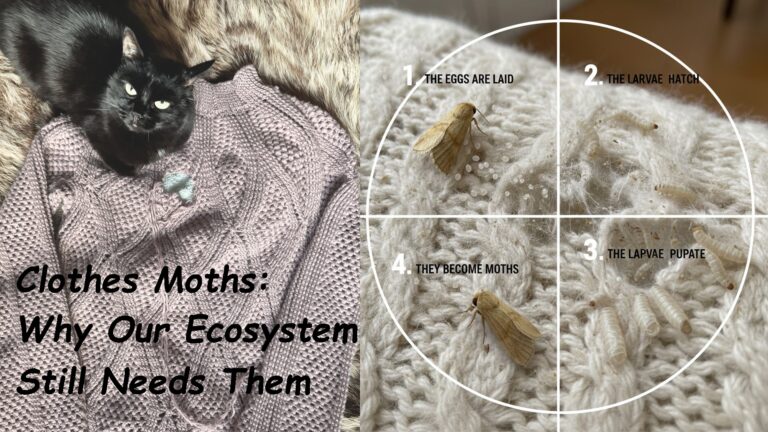
January 2026, I had to fight for my handmade crochet and knit sweaters, cardigans and scarves made of wool as I realized that some of them had holes in several places. As any of us who cherish warm, natural fibers know: moths are a genuine threat to our craft. And the most frustrating thing was realizing that my usual prevention methods failed completely.
“Invisible Eaters”
After a deep dive into research, I realized the clothes moths in my home weren’t the notorious two common clothes moth types. My “invaders” were different in size and habit, yet just as destructive. It was as if a silent guest arrived, feasted on huge holes, and vanished without a trace. And a sweater I wore in April 2025 became entirely unwearable by the end of the year.
Interestingly, my home isn’t a typical moth habitat and despite fly screens on all the windows, these uninvited guests found their way to my handmade wardrobe. We have wooden parquet floors in rooms and tiles in the kitchen – no carpets, due to my son’s allergies. I only have one crochet rug made from various yarn scraps, some of which are wool. While it is quite difficult to wash, at least it isn’t hidden away in a dark wardrobe. I usually wash my crochet rug in the summer and put it outside, where the bright sunlight acts as a natural deterrent – moths prefer dark, undisturbed places.
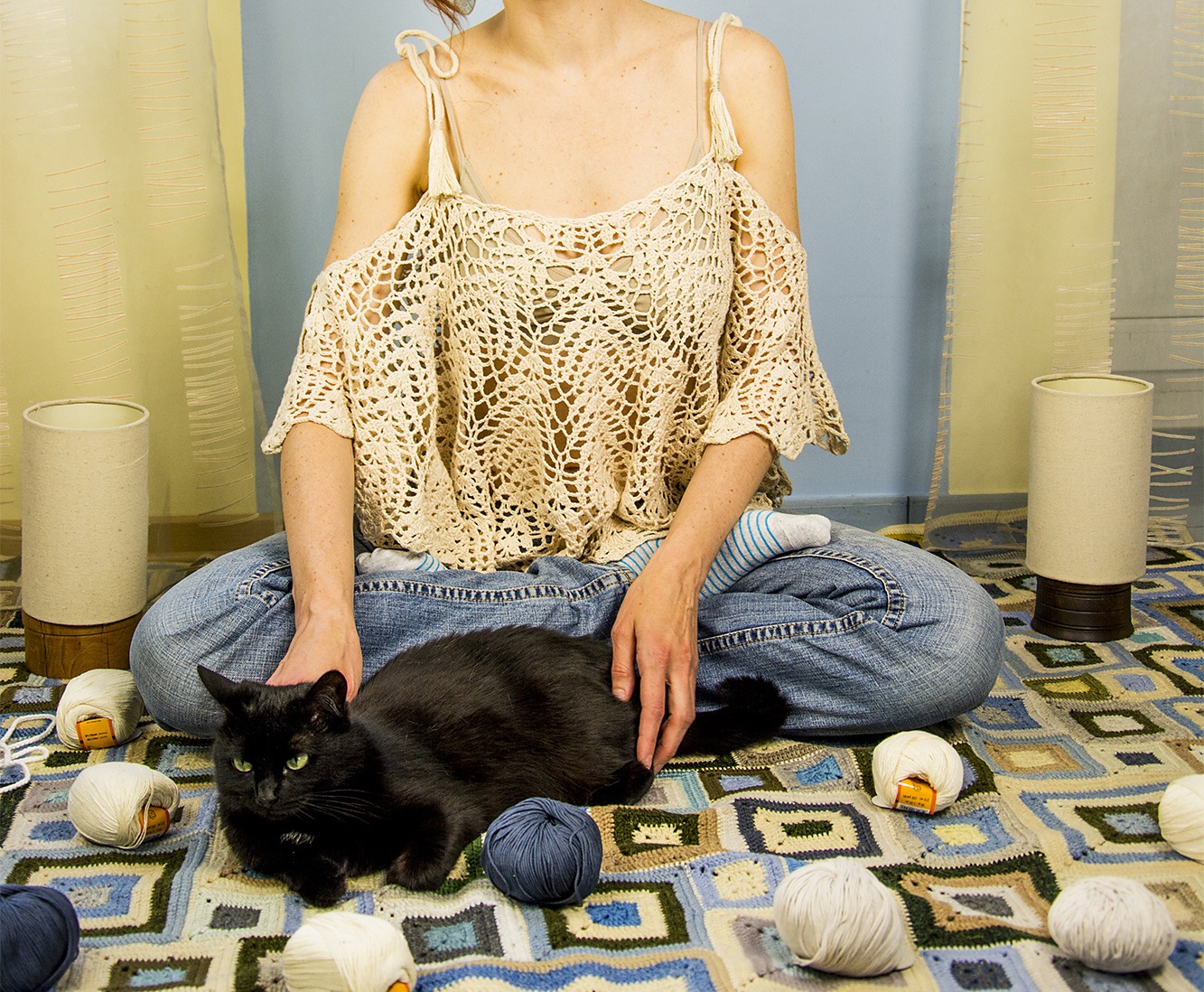
While my wool clothes were resting on the cold balcony, I decided to describe them here in case someone else has a similar issue with strange clothes moths. Whether they’ve changed due to climate shifts or something else, I have no idea. I’ve noted the differences between the specific moths that targeted my wardrobe and the common clothes moth described online.
The Common vs. my NEW moths: A Comparison
I noticed a few tiny creatures flying around that were barely half the length of a standard clothes moth. While the common adult moth prefers dark, undisturbed areas and are generally weak fliers, my small moths were lightning-fast. I often found them high up on the walls or ceiling (at the height 2.3-2.4 m = 7’8’’-7’9’’ from the floor), and they would fly away and disappear the moment I tried to catch them with my hands. I even found them hiding under towels in my bathroom and on the walls there, which is a sign that they loved humid places.
Common clothes moths are particularly attracted to clothing containing human sweat or other spilled organic liquids; even traces of dirt can provide essential nutrients for larval development. Female moths lay their eggs in these spots, as larvae are drawn to the food and moisture (they do not require liquid water). They munch holes and leave silken cases, threads, and frass (moth droppings) all over the garments, which in turn provides food for the next generation.
Here is what is left of my 11-skein 100% wool sweater – I have 52 balls of yarn of various sizes:
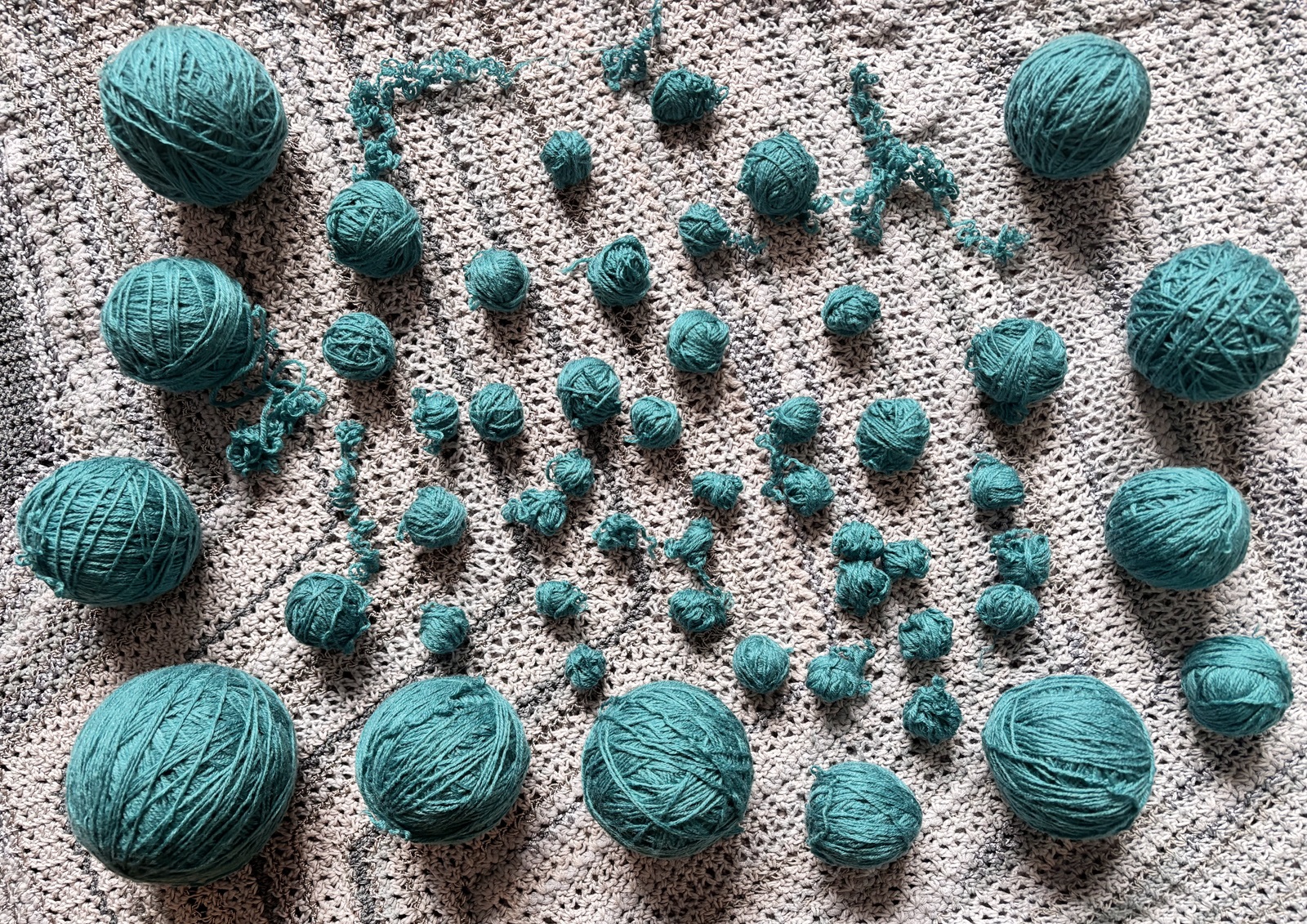
As I mentioned, I found no cases or threads – only some frass on two of my sweaters. My mistake was storing them after only one or two wears without a thorough wash. While we don’t typically wash woolens after every use (airing them out is the usual go-to), I’ve learned the hard way that I should wash everything before storing winter garments for the summer, when moths are most active. Moths love warmth, which is why their peak activity is between March and October; though in our heated homes, they have perfect breeding conditions all year round. Unfavourable temperature and humidity can slow their development, but won’t always stop it.
My “Deep Freeze” Rescue Mission
I emptied every shelf, vacuumed, and washed the wardrobe with soap and water. Then I washed and dried flat every piece of clothing containing even a small percentage of wool. While the temperature outside dropped to -22°C =-7°F, I put my clothes on the balcony where it stayed between -7°C and -11°C. The extremely cold weather was very uncomfortable for us, as our apartment grew colder too, but since I always look for positive things, I used these rare temperatures to do what a milder winter never could: frost was the perfect “natural” pesticide for my woolen items and yarn .
Mending sweaters
Some sweaters with small areas of damage could be mended after washing or dry cleaning. My “Perception sweater” had a huge hole right on the shoulder blade. I would have preferred it to be somewhere along the side (or not have it at all :)), but because the stitches are textured, I was able to mend it so the repair is nearly invisible unless you’re really looking for it. Another sign of those strange moths is that it left its eggs on the shoulder blade area, where I always wear a shirt underneath. so it’s free of sweat, etc. Typically, clothes moth larvae feed on old sweat and spills near the armholes. Here we can see the mending process and the result: www.instagram.com/p/DTGkvrqjjc4
And yes, you read it right – traditional moth deterrents like lavender, cedar, orange peel that I changed every 3 months haven’t helped. Despite the damage, I began to wonder: why do these creatures exist? Beyond ruining our favourite pullovers, what is their place in the world? Let’s look at some fascinating facts about moths and why our environment actually needs them.
Why Clothes Moths Never Want to Leave
Clothes moths have been our companions since before we were even human. They likely lived alongside our hairy primate ancestors, finding a perfect habitat in their sleeping nests. They have even been found on mummified human remains! These species have a cosmopolitan distribution, meaning they are found nearly everywhere in the world. While the exact mechanism of how they colonized our homes is still a mystery, their survival is undoubtedly linked to their very specific dietary choices. They are classified as a synanthropic species – organisms that thrive in human-created dry and warm environments. Stable temperature, nice humidity, a few predators and plenty of all kinds of delicious keratinaceous products helped clothes moths bypass their natural cycle and reproduce all year-round. Clothes moths found their niche and have since stopped looking. They are much more common in urban areas and centrally heated homes than in the countryside; in fact, they are rarely found outdoors anymore.
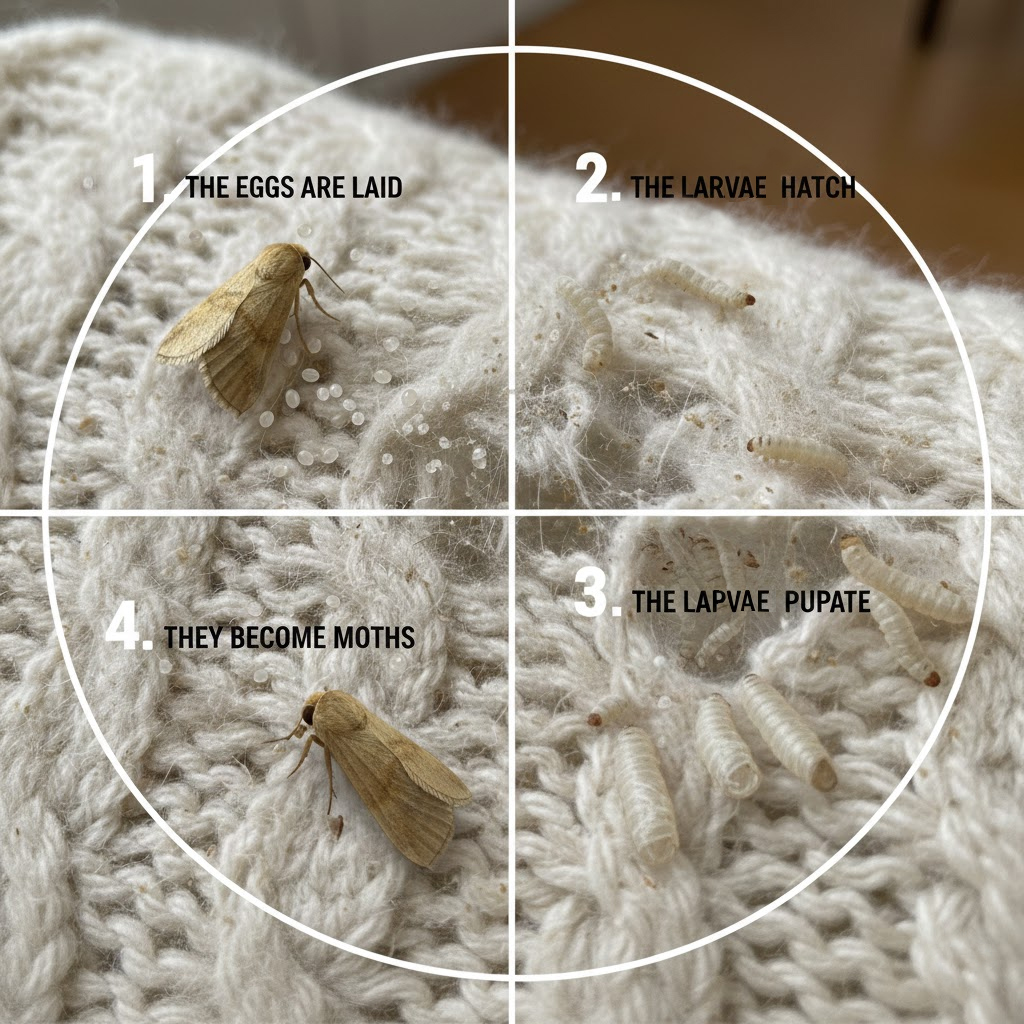
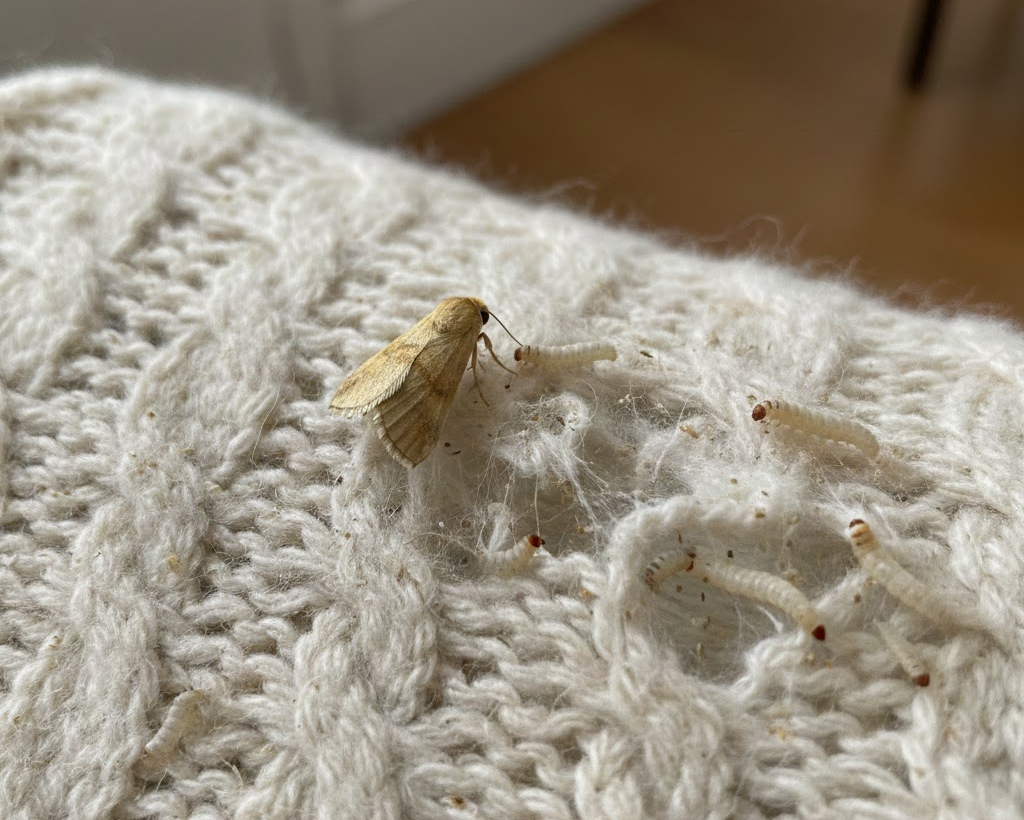
Disclaimer: this photo was generated by AI as I don’t have caterpillars and couldn’t take a good photo of my “mystery moth”:
Nature’s Master Recyclers: Why the Ecosystem Needs Moths
Clothes moths play a vital role in recycling essential nutrients like carbon, nitrogen, and phosphorus in the ecosystem. In the wild, when an animal died, various organisms began the process of decay – they broke down and recycled valuable nutrients. Bacteria, flies, and maggots consumed the flesh, but they left behind bones, cartilage, skin, fur, and feathers. These remains contained large amounts of keratin – a tough protein that most animals could not digest. However, a few insects, such as certain beetle species and moths (including clothes moths), evolved the ability to break down keratin. Thus, clothes moths and their keratin eating habits are actually beneficial – without them, the world would be littered with carcasses, feathers, and fur that refuse to disappear.
One moth within the Tineidae family, Ceratophaga, eats the shells of dead giant tortoises. Oinophila v-flava is a fungus-lover found in wine corks in such abundance that its name translates to ‘wine-lover.’ Webbing clothes moths can eat and digest keratin when they want to, they can also opt for fungus and other organic garbage when it’s available. This dietary flexibility is characteristic of other synanthropic species and may just be the key to their world domination.
Masters of Adaptation that are Built to Outlast Us
The more I researched, the more I realized these moths are efficient, dynamic, super-survival machines. Consider their incredible behavioral habits that contribute to their indestructibility:
-
Water Independence: They can metabolize their own water as a byproduct of digesting keratin. They don’t need to drink; they create moisture from your favourite wool sweater!
-
Extreme Temperature Tolerance: Their eggs or larvae are remarkably hardy, surviving temperatures for several days as high as 35°C = 95°F and as low as -15°C = 5°F (below freezing).
-
Chemical Resistance: Webbing clothes moths can digest toxic metals like arsenic, mercury, and lead. They can even metabolize synthetic materials or chew through soft plastics.
-
The “Pheromone Party”: Once they find a prime food source (like your yarn stash), they send out signals to invite nearby moths to join them.
The Two Most Common Moths:
While my “mystery moth” was a bit different, most common clothes moths are these two species:
1. The Webbing Clothes Moth Tineola bisselliella:
These are the ones that create silk-like webs in dark, undisturbed areas like corners of attics or basements. The body is small (6-7 mm = 0.24’’-0.28’’), and their wingspan usually reaches about 9-16 mm = 0.35’’-0.63’’ (most commonly 12-14 mm = 0.47’’-0.55’’). Grown moths are in muted tones like beige, gray, tan, light gold, brown, silver, shimmery champagne or taupe, their heads are yellowish or reddish yellow, and their wings have no dark markings.
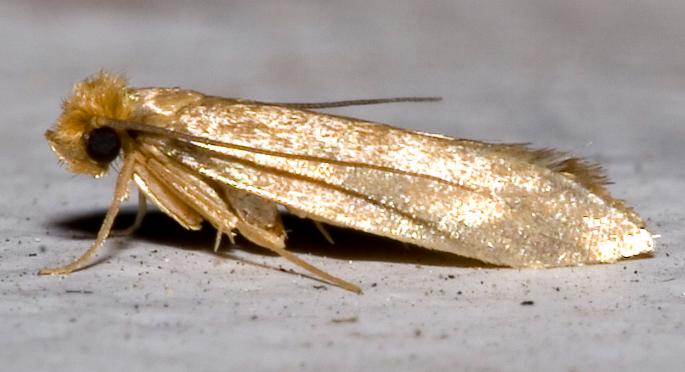
Adult moths are not much bigger than their larvae. The larvae are white, almost transparent, with a brown head. It lives in a silk tube – it spins silk over the fibers it’s eating and does not form a case around itself until they are ready to pupate (resting phase). These clothes moths hate light and are actually quite poor fliers (they scurry on foot), and are attracted to potential larval habitats like furs or old rugs. It’s not very good at dispersing and its spread is enabled by the movement of infested items. If you see one flitting about, it’s usually because it was disturbed from its hiding spot in a dark place.
If we spot such webs or see small, winged insects flitting about in neglected areas, it’s better to get rid of them. Left unchecked, they can create holes in your favourite clothes and damage upholstery, carpets, drapery, and other textile items by feeding on the fibers.
2. The Case-bearing Clothes Moth Tinea pellionella:
This species likely started out in bird or animal nests before moving into our wardrobes. They prefer dark, slightly humid, dusty and undisturbed places such as under sofas, wardrobes and beds. They are silvery-grey to shiny light brown, with dark grayish hairs on the top of their orangey or reddish-brown heads. Their pale greyish-brown forewings are grizzled brown with one large spot and a few smaller black spots. The hindwings are plain pale brown-grey, and the wings are surrounded by a hairy fringe. The size is similar to the Webbing moth, with a wingspan of 9 to 16 mm =0.35’’-0.6’’.
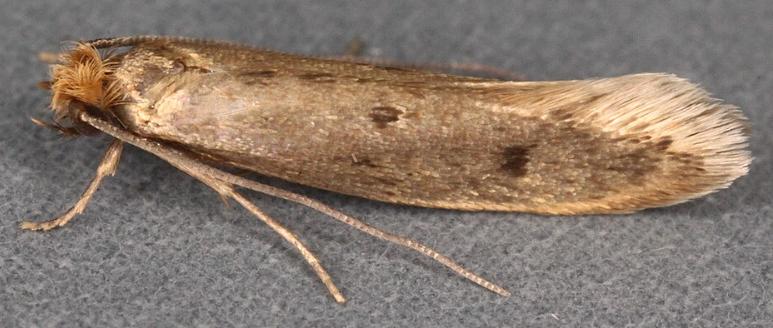
Their breeding cycle is similar to the Webbing moth, but uniquely they build themselves a portable protective case out of silk, hair, and the very fibers they are eating and hiding in. They are often blending in with the fabric so damage is not noticed until a bare spot or hole is produced. As they feed, caterpillars spin themselves up in a tube of silk, pieces of food, and their own “frass” (tiny droppings), and then carry that on top of themselves wherever they go. The larvae can live for a long time in this case, feeding and causing a great deal of damage before it pupates.
Pantry moths have no interest in our clothes.
How Do Clothes Moths Get In?
Unlike the moths that flutter toward a light source, clothes moths dislike the light and prefer dark secluded areas. Given their small size, they fly in through open windows or doors, or get in on second-hand furniture and vintage clothing. If you store clothing and furniture in garages or sheds, you’re essentially inviting them.
To be continued! Next time, I’ll share some useful tips for dealing with these uninvited guests. See you then! 🙂